
AI Voice Agent Vendor Selection Framework
How enterprise teams evaluate resolution quality, integration depth, and compliance posture before signing
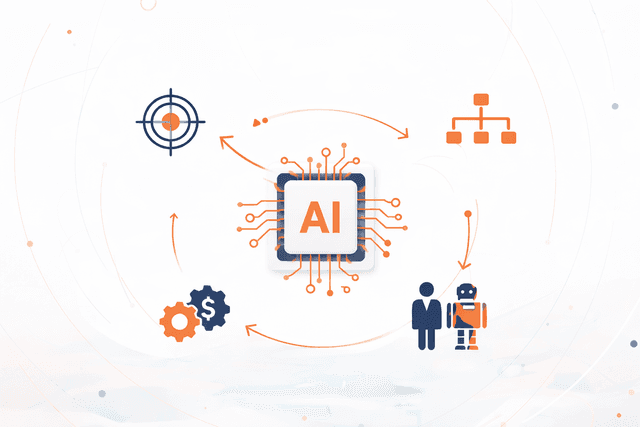
A practical framework for selecting AI voice vendors with fewer re-platforming risks and clearer outcome ownership.
What's inside
Key highlights
A glimpse of what the full piece covers — not the underlying data or full narrative.
- 01
Resolution quality testing methods beyond scripted demo scoring
- 02
How to evaluate CRM and telephony integration depth before rollout
- 03
Data ownership clauses that prevent long-term lock-in
- 04
Compliance checks for GDPR and EU AI Act readiness
- 05
Commercial model stress-testing at 3x and 10x interaction volume
Executive summary
Direct answers
- 01
What changed: Voice AI selection now hinges on operational reliability and governance, not model novelty alone.
- 02
Who should act now: procurement, CX, product, and compliance leaders running enterprise customer interaction channels.
- 03
Top 3 risks: over-trusting demo performance, under-scoping integration, and signing weak data ownership terms.
Most failed voice AI rollouts are procurement failures disguised as technical failures. Teams buy promising demos without verifying workflow fit under production constraints.
This guide turns vendor evaluation into a repeatable decision system: outcome-based testing, integration fit scoring, compliance checks, and cost modeling across scale scenarios.
Related services
The Five Criteria That Predict Deployment Success
Use five weighted criteria: resolution quality, integration depth, data ownership, compliance posture, and commercial structure.
A vendor that scores high on one category but weak on integration or governance usually creates hidden rework cost after pilot stage.
Vendor evaluation matrix (starter)
| Criterion | What to test | Evidence required | Fail signal |
|---|---|---|---|
| Resolution quality | End-to-end completion on real intents | Production references + benchmark run | High deflection but low true resolution |
| Integration depth | CRM + telephony + backend connectors | Implementation plan with timeline | Heavy custom integration for basics |
| Data ownership | Portability and training rights | Contract redlines | Ambiguous usage rights |
| Compliance posture | GDPR/EU AI controls | Audit docs and policy evidence | No clear readiness artifacts |
| Commercial structure | TCO at scale | 3x and 10x cost model | Costs spike with success |
Adjust weighting by industry risk profile and channel criticality.
Selection Process: 30-Day Decision Sprint
- 01
Week 1: Define outcome and test set
Build a representative intent pack and success thresholds.
Align all stakeholders on decision criteria before demos.
- 02
Week 2: Run benchmark scenarios
Test vendors on live-like scenarios, including edge cases.
Score both quality and operational fallback behavior.
- 03
Week 3: Validate integration and governance
Review implementation dependencies and control ownership.
Confirm escalation, audit, and rollback procedures.
- 04
Week 4: Final commercial and risk review
Model TCO across growth scenarios.
Approve only vendors with acceptable risk profile.
Frequently asked
What is the biggest mistake in voice AI vendor selection?
Choosing by demo fluency instead of workflow-level resolution and integration evidence.
How many vendors should we benchmark?
Typically 2–3 shortlisted vendors are enough when the benchmark is rigorous and comparable.
What should legal review first?
Data ownership, model training rights, retention policy, and compliance responsibilities.
Can we skip compliance checks for pilot phase?
No. Controls defined late usually delay scale and increase remediation cost.
Methodology & citations
Framework derived from report market analysis, vendor pattern mapping, and implementation retrospectives.
Sources
Source 01: The AI Voice Agent Industry Report 2026, Ravon Group.
Source 02: Public vendor documentation and platform disclosures.
Internal proof references
Proof 01: Related case-study evidence with quantified outcomes and implementation scope.
Prepared by Ravon Group Research Team — Strategic Intelligence
Applied AI delivery and enterprise transformation analysis.
Related services
How this topic connects to how we engage with clients.